
海外党回国加速避坑指南:ChickCN和旋风哪个好?附真实体验对比+隐藏干货

Living abroad, the smallest things can trigger homesickness—like wanting to catch up on the latest episode of your favorite domestic drama on Tencent Video, only to be greeted by the dreaded "region not supported" message. Or trying to join a family video call on WeChat but the connection keeps dropping, making conversations feel fragmented. For overseas students, workers, and华人, choosing the right回国加速器 is more than a tech decision—it’s about staying connected to the life back home. Recently, I’ve seen a lot of questions in expat groups: "ChickCN和旋风哪个好?" If you’re stuck between these two, or curious about other options like归雁VPN, or even the Malus VPN好用吗?和云帆VPN对比哪个回国效果更好? debate, this article is for you. I’ll share my real-world experiences, break down the pros and cons of popular tools, and reveal the accelerator that finally solved all my access problems.
Why Region Restrictions Are Such a Headache for Overseas Users
Content platforms like iQiyi and Tencent Video have strict licensing agreements that limit access to users within China. Games like Honor of Kings and League of Legends host domestic servers that block overseas IPs to maintain server stability. Even WeChat’s file transfer can lag if your IP is abroad, thanks to suboptimal routing paths. A回国加速器 bypasses these issues by masking your overseas IP with a Chinese one and optimizing the network route, making it feel like you’re browsing from back home.
ChickCN vs 旋风:A Side-by-Side Real Experience
I used ChickCN for two months last year. It has nodes in major Chinese cities like Beijing and Shanghai, but during peak hours (7-10 PM CST), the speed dropped from 80Mbps to 10Mbps—watching a drama meant buffering every five minutes. Their iOS app crashed occasionally when switching to WeChat, and the basic plan’s 50GB monthly limit left me throttled to 1Mbps once I exceeded it, which was useless for streaming.
Then I tried 旋风. It’s better for gaming; my ping to the domestic LoL server hovered around 45ms, which was playable. But their Mac client was clunky—the split tunneling feature (choosing which apps to accelerate) required watching a tutorial twice to set up. When I had a Windows client issue, their email support replied after 24 hours, too slow for a game night I’d been looking forward to.
So which is better? ChickCN works for casual streamers, while 旋风 suits gamers, but neither is perfect for all needs.
What About 归雁VPN and the Malus vs 云帆 Debate?
归雁VPN came recommended by a student friend in Canada. It’s cheap ($3/month basic plan) but has limited nodes—only three Chinese cities. Once, the Guangzhou node was so crowded my speed dropped to 5Mbps; switching to Beijing didn’t help. Their Android app lacked smart routing, forcing manual node selection every time.
Malus VPN vs 云帆 VPN is another common debate. Malus has a sleek interface; its iOS app streamed Douyin buffer-free for a week. But Genshin Impact ping hit 80ms, too high for fast-paced play, and the unlimited plan cost $12/month—pricier than alternatives. 云帆 was great for Tencent Video 4K streaming, but its Windows client had annoying pop-up ads, and the Shenzhen node went down for two hours without notification, leaving me stranded mid-drama.
Why Tomato Accelerator (番茄加速器) Is My Go-To Choice
I found Tomato Accelerator last quarter, and it’s been a game-changer. Let’s start with global nodes and smart routing: I travel for work often—London, Paris, Tokyo—and Tomato’s 30+ country coverage meant I always had a nearby node. The smart route feature picks the best line automatically, saving me from 10-minute node tests each time.
Multi-device support is a lifesaver: I use a Mac for work, iPhone for daily use, Windows laptop for gaming, and Android tablet for dramas. One Tomato account connects up to five devices at once—no logging out or extra fees. I can stream iQiyi on my laptop, chat on WeChat, and play Honor of Kings all at the same time.
Stable unlimited traffic and dedicated lines are non-negotiable. Tomato’s unlimited plan means no throttling; smart分流 only accelerates domestic apps, so my Google/Netflix browsing stays fast. Dedicated lines for影音 and games make 4K Youku buffer-free even at peak hours, and LoL ping stays under 50ms. The 100M独享 bandwidth lets me download 1GB Baidu Netdisk files in a minute—10x faster than before.
Data security is critical for my remote work. Tomato uses AES-256 encryption and专线传输, so public Wi-Fi in cafes doesn’t put my sensitive documents at risk. I can safely send work files via WeChat without worrying about prying eyes.
After-sales support is top-notch. Last week, my Android app wouldn’t connect to Shanghai—WeChat support replied in five minutes, walking me through a cache clear fix that worked in 10 minutes. Real-time help like that is rare with other tools.
Final Tips for Seamless Domestic Access
When choosing an accelerator, keep these in mind: Test node coverage if you travel; avoid data caps for heavy use; ensure multi-device support; check customer responsiveness before buying; and look for dedicated lines if you stream or game. These small checks save you from future frustration.
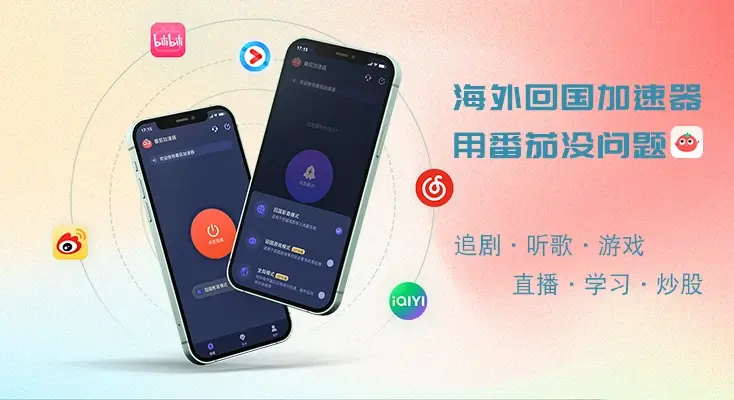
Going back to the original question—"ChickCN和旋风哪个好?" Both are okay, but neither matches Tomato’s all-around convenience and stability. For those wondering about归雁VPN or Malus vs云帆, save time and try Tomato first. It’s not just an accelerator; it’s a way to stay connected to home without hassle. Whether streaming dramas, gaming with friends, or family calls, Tomato makes it seamless. I’ve used it six months now with zero issues—it’s the best investment I’ve made for staying close to China while living abroad.